


Logistics out of control? Insights from the UNHYDE podcast
4/13/2026
%20(1704%20x%20960%20px)%20(1).avif)
Our Co-Founder Johannes Tress was recently a guest on the UNHYDE podcast, where he spoke about a topic many eCommerce brands only fully understand once it becomes critical: logistics.
One pattern became clear throughout the conversation.
Logistics tends to stay invisible for a long time. As long as orders arrive on time and processes run smoothly, it is rarely questioned. That is exactly where many brands develop a false sense of control.
Because the moment something stops working, logistics becomes immediately visible. And at that point, it is no longer an operational detail - it becomes part of the customer experience.
How simple setups work for a long time
In early stages, logistics is rarely a bottleneck. A single warehouse, one fulfillment partner, and manageable volumes are usually enough to run operations reliably.
Decisions can be made quickly because all relevant information is available. Inventory is clearly assigned, and the question of where an order should be shipped from barely comes up.
The system appears stable, even though it is simply operating with low complexity.
The critical transition for scaling brands
As companies grow, this reality changes.
New markets are added, additional warehouse locations are set up, and each new logistics partner increases the number of dependencies. At the same time, expectations around delivery speed and service continue to rise.
In the podcast, Johannes describes this exact moment: operational reality evolves faster than the structure designed to support it.
Where control is lost in day-to-day operations
Loss of control rarely happens in a single moment. As discussed in the conversation, it is a gradual shift: operational complexity increases, while the underlying structure stays the same.
In practice, this becomes very tangible.
Once multiple warehouses, systems, and partners are involved, data no longer flows cleanly. Inventory is managed across different systems, updates are delayed, and there is no single, reliable view of actual availability.
As a result, decisions are no longer clearly controlled.
An order might be shipped from a warehouse in Germany, even though inventory is already available closer to the customer. Not because this decision was made intentionally, but because the transparency required to make the right decision is missing.
The same applies to inventory. A product may appear available in the system, even though it is not actually ready to be shipped. This is often caused by delayed updates, missing synchronization between systems, or inconsistent data structures.
These issues do not occur randomly.
They accumulate as more markets, more warehouses, and more partners are added - increasing the number of dependencies while decision logic remains unchanged.
What worked in a simple setup becomes increasingly unreliable under these conditions.
Teams start reacting to individual issues instead of managing the system as a whole.
The reason operational effort increases with growth
As complexity increases, the way teams work also changes. What used to be decided directly is now replaced by coordination.
Teams align across multiple partners, manually reconcile data, and build temporary solutions to compensate for missing transparency. In many cases, Excel-based workarounds emerge just to track inventory or shipment status.
The system still functions - but no longer on its own.
It works because additional effort is continuously applied.
Understanding how growth exposes these issues
One key takeaway from the conversation is that growth itself is not the problem. It simply exposes what already exists in the system.
This becomes especially visible during peak periods. When volume and customer expectations increase at the same time, even small inefficiencies start to have noticeable effects.
Routing decisions that are slightly inefficient in everyday operations can lead to systematic delays. Lack of transparency slows down decision-making precisely when speed matters most.
What could previously be compensated becomes a bottleneck under pressure.
The role of data as the real foundation
The podcast also highlights a common misconception: many companies look for solutions in new tools or automation.
In practice, these approaches often fail because of the underlying data.
If inventory is displayed differently across systems or there is no consistent view of orders and fulfillment, even highly specialized solutions cannot deliver reliable results. Forecasts become inaccurate, and automated decisions lead to errors.
The issue is not the tool - it is the lack of structured data.
What structured logistics looks like
Companies that successfully navigate this phase do not just optimize individual processes - they change their entire approach.
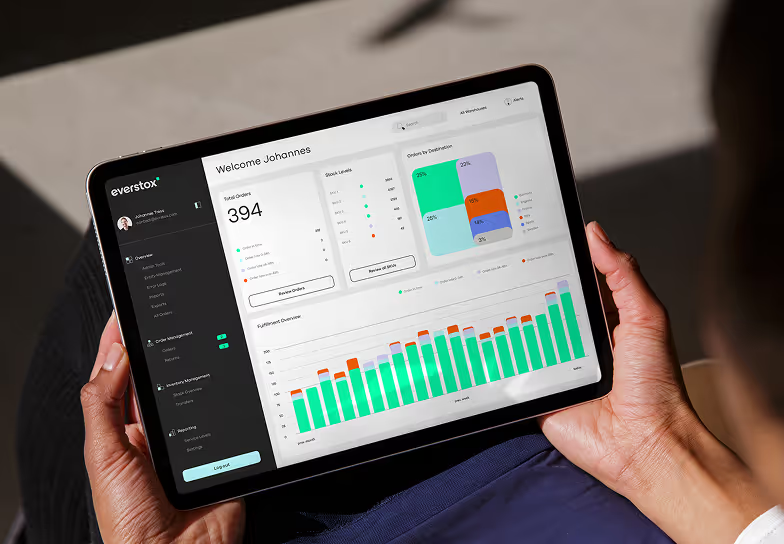
They create a central view of their logistics, where inventory, orders, and fulfillment data come together. Decisions are no longer made in isolation, but based on a consistent and reliable information foundation.
At the same time, logistics is treated as a network rather than a set of isolated locations. Orders are no longer fulfilled “somewhere,” but intentionally from the location that best balances delivery time, cost, and availability.
As a result, operational work changes. Teams spend less time coordinating and more time managing.
Conclusion: logistics becomes a management function
A key pattern from the conversation is the shift in the role of logistics.
What works operationally in early stages becomes a management challenge as complexity increases.
For scaling eCommerce brands, this means that success is not determined by volume, but by the ability to structure and control complexity.
In the end, it is not about processing more orders.
It is about consistently understanding what is happening within the system - and making the right decisions based on that understanding.
This shift is discussed in more detail in the UNHYDE Podcast. [German]
Preguntas frecuentes
Why does logistics suddenly become a problem for scaling eCommerce businesses?
How can eCommerce brands regain control over their logistics?
Más artículos interesantes

Fulfillment vs. growth – insights from the abscale podcast
As eCommerce brands grow, fulfillment setups that once worked often start to show their limits.
Not because operations fail - but because complexity increases and the underlying model doesn’t evolve with it.
This is exactly what Johannes Tress discusses in the abscale podcast, and why many fulfillment setups reach a point where they no longer scale.

Documentos aduaneros: cómo evitar retrasos y en el comercio internacional
Tu mercancía está empacada, el transportista reservado y el cliente en el extranjero espera su entrega, y de repente todo se detiene. El motivo: el envío queda retenido en el despacho aduanero. Para comerciantes de eCommerce y proveedores de fulfillment, este es el peor escenario posible. Significa retrasos en la entrega, costos de almacenamiento inesperados, sanciones y clientes frustrados.
La buena noticia: muchos de estos riesgos pueden evitarse con procesos claros y documentos aduaneros completos, especialmente cuando toda la documentación requerida está preparada de forma precisa y sin errores.
Esta guía te ofrece una visión práctica de qué documentos son importantes para la exportación, cómo evitar errores en la factura comercial y cómo las declaraciones aduaneras automatizadas hacen que tu crecimiento internacional sea escalable, desde la comprensión de responsabilidades hasta la optimización digital de procesos. Una documentación aduanera impecable es fundamental en cada sección del flujo de trabajo, en cualquier área operativa.

Dominar los picos estacionales: cómo el multi-warehousing ayuda a prevenir cuellos de botella
Tus campañas de marketing para el Black Friday o la temporada navideña están a toda marcha, los servidores soportan el tráfico, los pedidos se disparan, y entonces todo se detiene. No en tu tienda, sino en el almacén. Cuando los paquetes se quedan atascados, los tiempos de procesamiento se disparan y los clientes esperan sus pedidos, el "apagón logístico" se convierte en realidad.
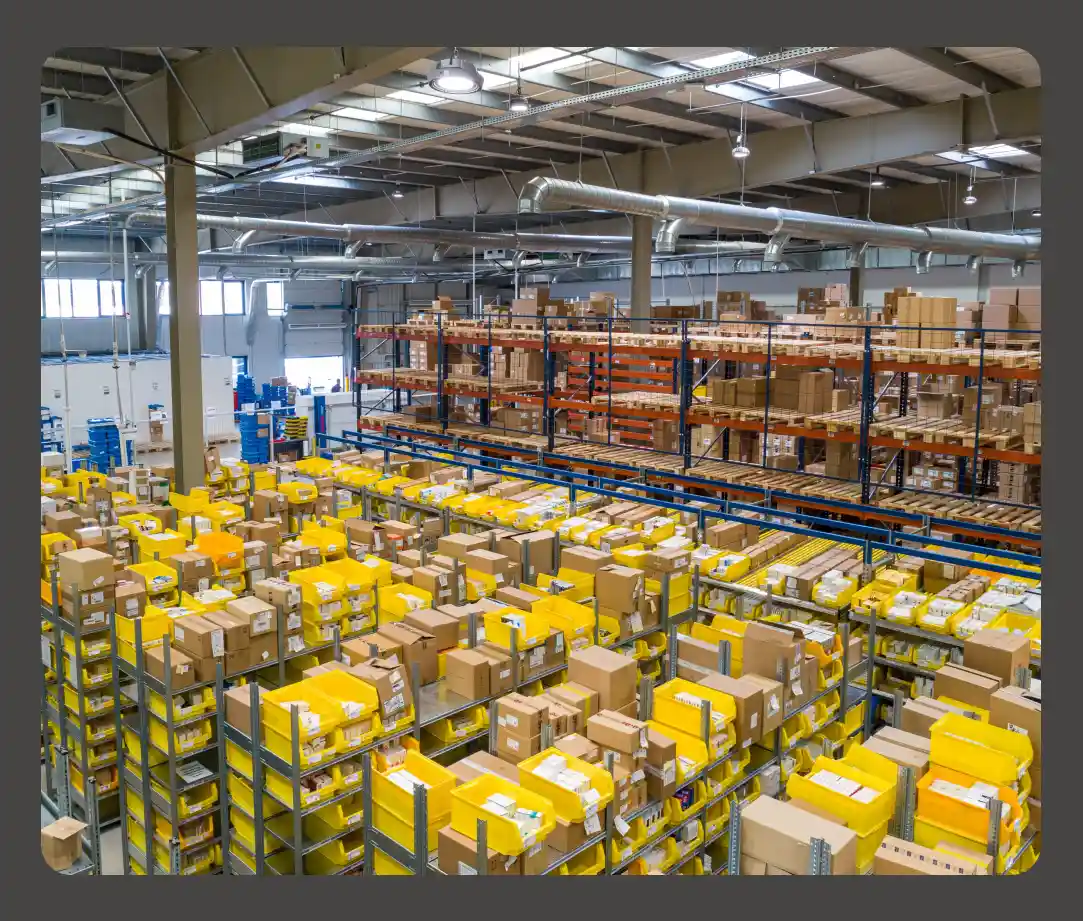
Una única ubicación de almacén se convierte rápidamente en un "punto único de fallo" durante el fulfillment en temporada alta. La solución para retailers de eCommerce y comercio online en crecimiento no es un almacén central más grande, sino flexibilidad: una estrategia basada en el multi-warehousing.
Este artículo te muestra por qué el almacenamiento descentralizado se ha vuelto esencial en el eCommerce moderno. Desglosamos los riesgos ocultos de la centralización, destacamos las ventajas estratégicas de una configuración multi-warehousing y ofrecemos una guía clara sobre cómo elevar tu gestión de inventario mediante la automatización y la red de socios adecuada.