

Lot tracking and batch tracing in eCommerce
3/31/2025
What is lot tracking?
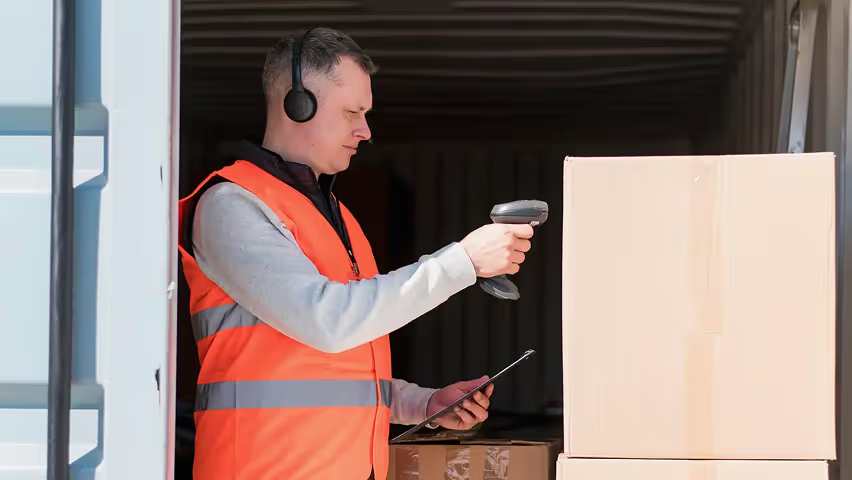
Lot tracking – or batch tracking – describes the traceability of products using a lot number or batch number throughout the entire supply chain: from manufacturing, storage and packaging to sale to the end consumer. This allows production batches to be precisely identified – based on date, production quantity, location and even the raw material used.
Industries that benefit from lot tracking
- Food & Beverage: reliable traceability protects your customers and simplifies recall processes.
- Cosmetics & Pharma: meet all legal requirements – without manual errors. From production to delivery.
- Fashion & Electronics: protect yourself from counterfeiting and control batches for materials or components.
Lot numbers, SKUs and serial numbers – the differences
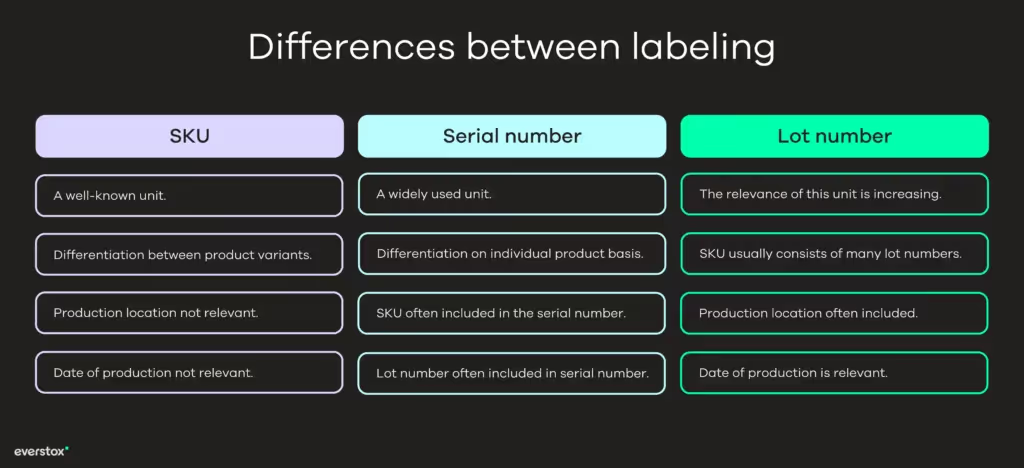
Lot number – the identification of a production batch
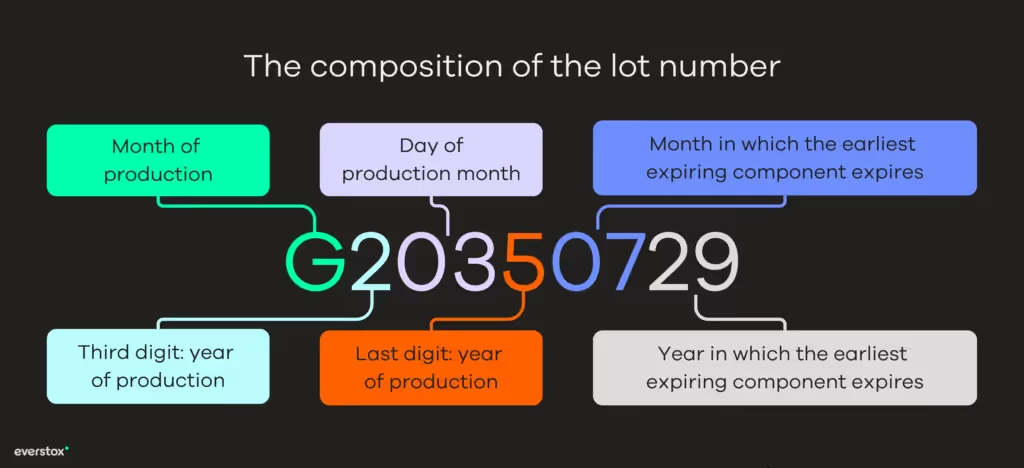
All products in a batch have the same lot number. This is inseparably linked to a specific production quantity, manufactured under the same conditions. It enables precise traceability – ideally back to the individual starting materials used.
Use: food, cosmetics, pharmaceuticals
Important for: recalls, quality assurance, legal documentation
SKU – the article number for the warehouse organization
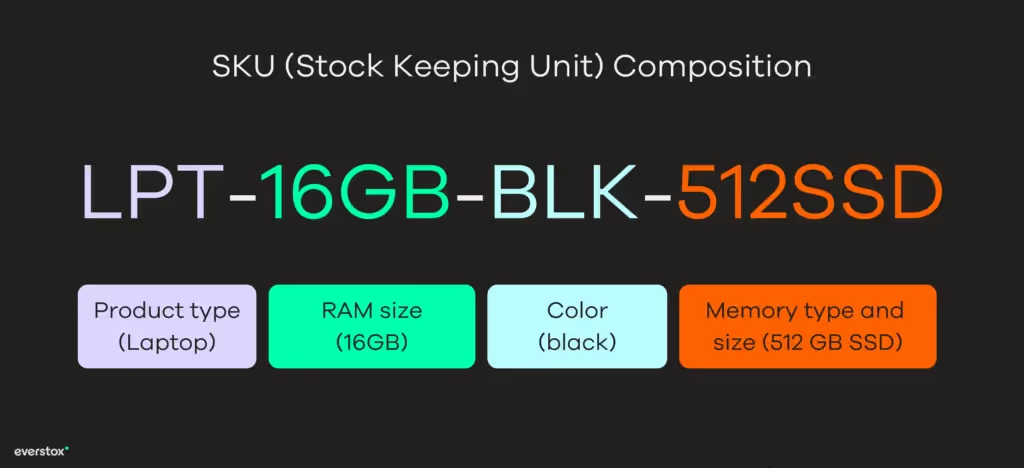
The SKU is your internal article number for a specific product, regardless of when it was manufactured. It is used for warehouse management, inventory control and fulfillment.
Use: eCommerce, Retail, ERP systems
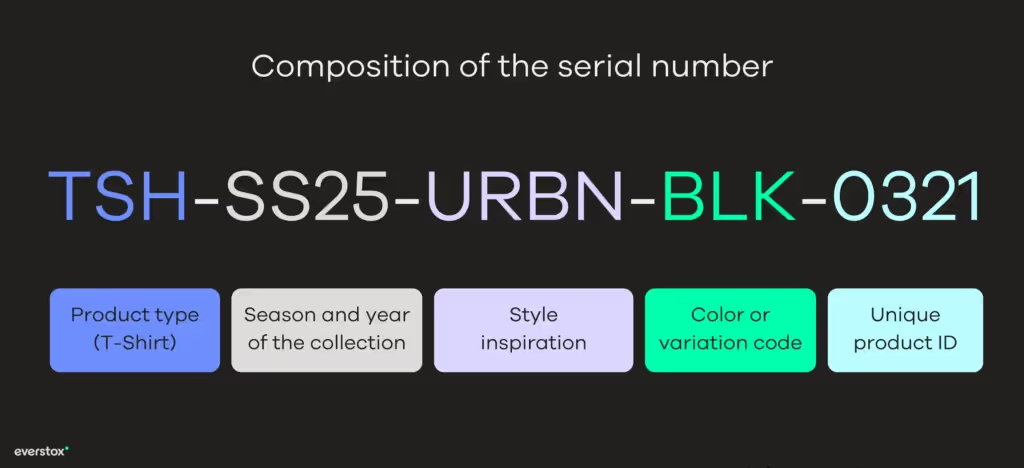
Serial number – for tracking individual products
Each product is given a unique serial number, e.g. for electronics or medical devices. This allows tracking from the manufacturer to the consumer – with direct assignment to a customer or an order.
Use: high-quality or safety-relevant products
Important for: warranty, service, counterfeit protection
Best before date and batch trace
The best-before date is a central component of lot tracking, especially for perishable products. Companies often rely on FIFO (first in, first out) or FEFO (first expired, first out) to manage sales as efficiently as possible. This helps to ensure that products with short best-before dates are not left in the warehouse and reduces returns and losses.
Why is batch tracking essential for your fulfillment?
Batch tracking is not only a legal requirement – it also brings tangible benefits for your fulfillment:
Quality assurance & traceability
If a problem occurs, e.g. with defective packaging or a raw material, the affected quantity can be identified immediately. You can carry out targeted recalls without unnecessarily endangering large inventories.
Inventory control & warehouse optimization
With the help of the lot number, you always have an overview of batches, quantities and storage locations. This simplifies both warehousing and preparation for returns or seasonal goods.
Legal requirements & compliance
In Germany and many other markets worldwide, batch tracking is considered a prerequisite for product safety and consumer protection. Especially for companies in the EU, seamless documentation is mandatory – and lot tracking helps you to digitally fulfill this requirement.
Advantages of lot tracking in eCommerce
- Increased warehouse transparency
- Minimizes risk of product recalls
- Less spoilage due to FEFO/FIFO
- Better inventory planning
- Stronger customer loyalty through quality assurance
Conclusion: how lot tracking optimizes your fulfillment
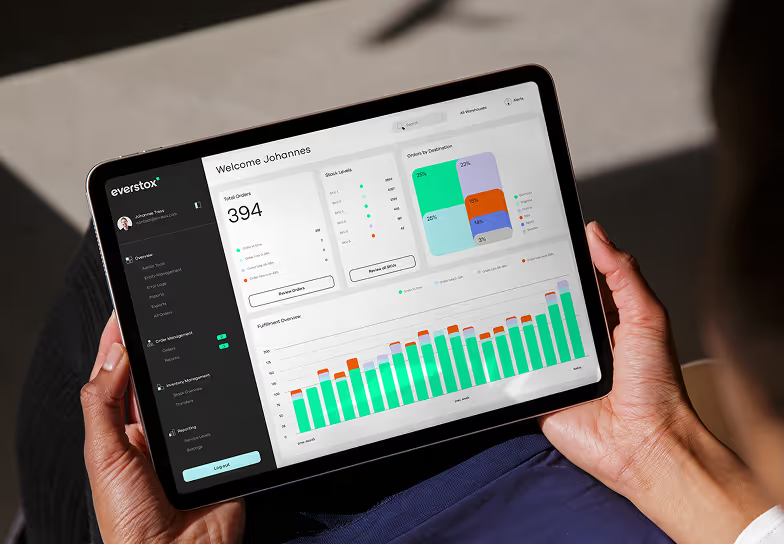
Lot tracking ensures maximum transparency along the entire supply chain, optimizes warehouse management and helps companies comply with regulatory requirements. everstox offers a smart, automated solution that seamlessly integrates with existing systems and enables efficient, compliant fulfillment.
Frequently asked questions
How does lot tracking differ from serial number tracking?
Is batch tracking relevant for small shops too?
What role does lot tracking play in returns management?
Can I fulfill legal traceability requirements with lot tracking?
About the author

Anna Kraus
Expert for eCommere & logistics
With over seven years of experience in online marketing, Anna is responsible for the content strategy and editorial development of the everstox website. Her work focuses on eCommerce, logistics, and supply chain management, translating complex operational topics into clear, relevant, and actionable insights.
Since joining everstox in 2024, Anna has taken full ownership of the company’s editorial content, including blog articles, in-depth industry pieces, and the complete everstox glossary. Her content connects current trends in eCommerce and logistics with the real-world challenges faced by growing brands, helping decision-makers navigate an increasingly complex operational landscape.
Anna holds a bachelor’s degree from the University of Salzburg and earned a Master of Business Administration with a focus on health management from IU International University. Her master’s thesis on occupational health management reflects her analytical mindset and her interest in how integrated strategies can strengthen long-term business performance.
By combining academic rigor with hands-on marketing experience, Anna delivers content that goes beyond surface-level commentary. Her work offers readers a clear, well-informed perspective on the intersection of digital innovation, logistics, and supply chain operations, with a strong focus on practical relevance and strategic clarity.
More growth, less effort.
Scale fulfillment, shipping, and warehousing with a platform that brings everything together.
More interesting articles

Fulfillment vs. growth – insights from the abscale podcast
As eCommerce brands grow, fulfillment setups that once worked often start to show their limits.
Not because operations fail - but because complexity increases and the underlying model doesn’t evolve with it.
This is exactly what Johannes Tress discusses in the abscale podcast, and why many fulfillment setups reach a point where they no longer scale.

%20(1704%20x%20960%20px)%20(1).avif)
Logistics out of control? Insights from the UNHYDE podcast
In a recent episode of the UNHYDE podcast, our Co-Founder Johannes Tress shares what actually changes in this phase, and why many eCommerce brands start running into structural challenges long before they realize it.
This article breaks down those patterns and explains where control is typically lost - and what distinguishes setups that scale from those that don’t.
Customs documents: how to avoid delays and in international trade
Your goods are packed, the carrier is booked, and the customer abroad is waiting for delivery – and suddenly everything comes to a halt. The reason: the shipment gets stuck in customs clearance. For eCommerce merchants and fulfillment providers, this is a worst-case scenario. It means delivery delays, unexpected storage fees, penalties, and frustrated customers.
The good news: many of these risks can be avoided with clear processes and complete customs documents – especially when all required documents are fully prepared and accurate.
This guide gives you a practical overview of which documents matter for export, how to avoid errors on the commercial invoice, and how automated customs declarations make your international growth scalable – from understanding liabilities to digital process optimization. Clean customs documentation is crucial in every section of the workflow, across any operational area.