

Fulfillment vs. growth – insights from the abscale podcast
4/16/2026

In a recent conversation on the abscale podcast, everstox Co-Founder Johannes Tress describes a situation many eCommerce brands eventually reach - not in the beginning, but when the business starts to truly scale.
At that point, the question is no longer purely operational, but structural:
Is our current fulfillment setup still sufficient - or is it no longer aligned with what the business has become?
In early stages, this question often feels unnecessary. A fulfillment partner handles operations, a central warehouse is enough, and processes run smoothly. As long as orders arrive on time, there is little reason to rethink the setup.
Growth doesn’t just increase volume - it changes requirements
As brands grow, this reality gradually shifts. New markets are added, delivery time becomes more relevant, and customer expectations increase. At the same time, internal complexity rises - not abruptly, but continuously.
As volume grows, there is more movement in the system, a broader product range increases variability, and expanding into new markets adds further operational requirements.
Eventually, the point is reached where the original setup no longer fits the level of complexity it needs to support.
Two dominant models - both with limitations
The fulfillment landscape is largely shaped by two approaches. On one side are traditional logistics providers. On the other, technology-driven solutions.
Both work - but only up to a certain point.
Traditional 3PLs are strong in execution. Processes are established, warehouses operate reliably, and standard operations are handled efficiently. The challenge begins when coordination across multiple dimensions becomes necessary.
As soon as multiple warehouses, markets, or more complex requirements come into play, there is often no unified view of the system. Data is not consistently available, decisions require coordination, and adjustments become increasingly time-consuming.
The system continues to function - but becomes harder to control.
Why technology alone doesn’t solve the problem
Technology-led solutions address exactly this lack of transparency. They structure data, create visibility, and enable automation.
However, one key point becomes clear in the podcast:
Logistics is not purely a digital problem.
It happens physically - in warehouses, in processes, with people. As Johannes Tress puts it, logistics ultimately remains a “people game.”
If technology is not tightly connected to operational execution, a different issue emerges. Transparency exists, but it does not automatically translate into control.
Decisions can be made - but not necessarily implemented fast enough.
The real issue is structural, not technological
Many companies implicitly choose between two extremes: operations or technology.
Both approaches work initially. But as complexity increases, it becomes clear that this separation itself creates limitations.
Typical symptoms include inefficient routing decisions, limited visibility across inventory, and growing coordination effort between systems and partners.
These issues are not caused by isolated mistakes, but by a setup that was never designed as an integrated system.
Why these limitations only appear during growth
A key insight from the podcast is that these structural weaknesses often remain hidden for a long time.
As long as the setup is simple, both models perform adequately. It is only under pressure - during international expansion or peak seasons - that the limitations become visible.
Small inefficiencies begin to accumulate, decisions take longer, and the system reacts more slowly - precisely when speed matters most.
Fulfillment needs to be treated as an integrated system
The core takeaway from the conversation is not technological, but structural.
Fulfillment needs to be understood as a system - not as a combination of separate components.
This means operational execution and technological control must be designed together from the beginning. Data needs to be centralized and reliable, decisions need to be based on a consistent view, and execution needs to be directly connected to that decision layer.
This becomes especially relevant in international setups. A central warehouse can work efficiently for a long time, but eventually reaches its limits. Local fulfillment improves delivery speed and cost efficiency, but also increases complexity.
Without coordination, this added complexity creates new problems.
What this means for scaling brands
For growing eCommerce companies, the perspective shifts.
The question is no longer which fulfillment partner to choose or which tool to implement. The real question is whether the chosen model remains controllable as complexity increases.
Because this is where scaling either becomes stable - or turns into operational risk.
Conclusion
The abscale podcast highlights that most fulfillment setups don’t fail because of isolated issues, but because of their underlying structure.
Traditional models provide operational stability.
Technology-driven approaches create transparency.
The real challenge emerges when both remain disconnected.
As complexity increases, success is no longer defined by individual optimizations - but by the ability to control the system as a whole
If you want to explore this topic further, feel free to listen to the podcast episode with Johannes Tress. [German]
Frequently asked questions
When should I rethink my fulfillment setup?
Why aren’t traditional fulfillment providers or standalone software solutions enough?
About the author

Isabelle Agalarov
Content & Marketing expert with focus on eCom & logistics
Isabelle Agalarov contributes to the creation and development of content at everstox, focusing on eCommerce, logistics, and fulfillment. Her work centers on translating complex topics into clear, structured content with practical business relevance.
As part of her studies in Marketing & Digital Media at FOM University of Applied Sciences in Munich, Isabelle focuses on digital business models, content strategies, and data-driven marketing. She complements this academic foundation with hands-on experience in content creation, social media, and the management and optimization of digital platforms.
Her profile is further strengthened by prior experience in content-related roles, as well as her vocational training as an automotive business administrator and her work at BMW Group. There, she developed a strong understanding of customer needs, communication, and target audience-oriented messaging.
Her approach is centered on creating content that is clear, structured, and accessible. The focus lies on presenting relevant eCommerce and logistics topics in a way that remains easy to understand while maintaining strong practical relevance.
More growth, less effort.
Scale fulfillment, shipping, and warehousing with a platform that brings everything together.
More interesting articles
%20(1704%20x%20960%20px)%20(1).avif)
Logistics out of control? Insights from the UNHYDE podcast
In a recent episode of the UNHYDE podcast, our Co-Founder Johannes Tress shares what actually changes in this phase, and why many eCommerce brands start running into structural challenges long before they realize it.
This article breaks down those patterns and explains where control is typically lost - and what distinguishes setups that scale from those that don’t.

Customs documents: how to avoid delays and in international trade
Your goods are packed, the carrier is booked, and the customer abroad is waiting for delivery – and suddenly everything comes to a halt. The reason: the shipment gets stuck in customs clearance. For eCommerce merchants and fulfillment providers, this is a worst-case scenario. It means delivery delays, unexpected storage fees, penalties, and frustrated customers.
The good news: many of these risks can be avoided with clear processes and complete customs documents – especially when all required documents are fully prepared and accurate.
This guide gives you a practical overview of which documents matter for export, how to avoid errors on the commercial invoice, and how automated customs declarations make your international growth scalable – from understanding liabilities to digital process optimization. Clean customs documentation is crucial in every section of the workflow, across any operational area.

Mastering seasonal peaks: how multi-warehousing helps prevent bottlenecks
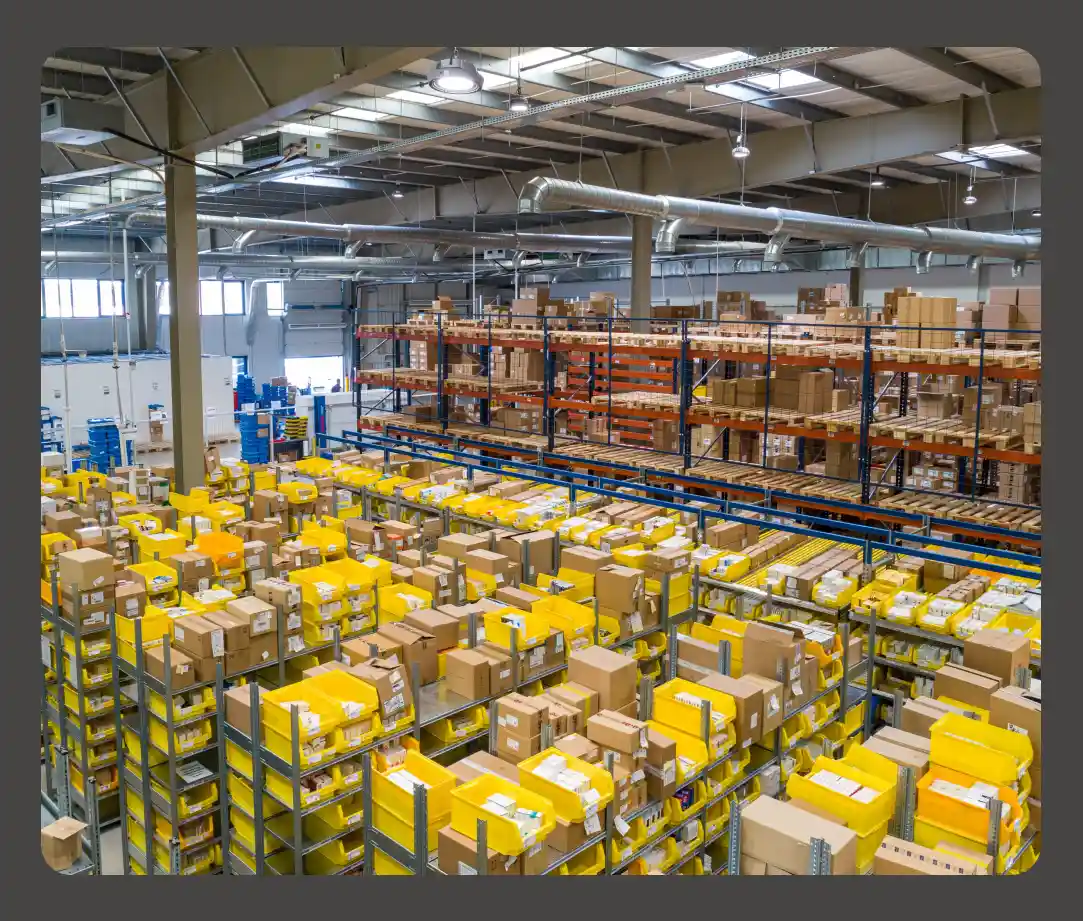
Your marketing campaigns for Black Friday or the holiday season are running at full speed, the servers handle the traffic, orders skyrocket – and then everything stops. Not in your shop, but in the warehouse. When parcels remain stuck, throughput times explode and customers wait for their orders, the “logistics blackout” becomes reality.
A single warehouse location quickly turns into a “single point of failure” during peak season fulfillment. The solution for growing eCommerce and online retailers isn’t a bigger central warehouse, but flexibility: a strategy built on multi-warehousing.
This article shows you why decentralized warehousing has become essential in modern eCommerce. We break down the hidden risks of centralization, highlight the strategic advantages of a multi-warehousing setup and offer a clear guide on how to elevate your inventory management through automation and the right partner network.